
عقد vs Contract
Abstract
This paper aims to examine the Arabic root (ʿ–q–d ع-ق-د) through a semantic–etymological analysis based on its usages as recorded in the Doha Historical Dictionary of the Arabic Language and the Riyadh Contemporary Dictionary. It then proposes a unifying definition capable of accounting for the diversity of these usages within a single semantic core. The study subsequently turns to an analysis of the English word contract, examining its Latin origin and semantic development, and proposes a precise definition consistent with its original etymological meaning. The paper concludes with a comparative linguistic analysis of the Arabic and English concepts, highlighting points of convergence and divergence in their respective semantic conceptualizations of commitment and binding.
The Arabic Root (ʿ–q–d ع-ق-د): Lexicographic Material
1.1 The Doha Historical Dictionary of the Arabic Language
The meanings of the root ʿ–q–d appear in the dictionary across a broad range of usages, among the most prominent of which are:
ʿAqada the rope and the like: he tightened it firmly and bound it.
ʿAqada the fingers: he brought them together and interlaced some of them with others.
ʿAqada the hair: he curled it and made it into braids.
ʿAqada the building: he arranged its stones and secured some of them within others.
ʿAqada the fat: he built it up and accumulated it.
ʿAqada the food with something else: he mixed it with it and made it thicker.
In the mental and volitional domain:
ʿAqada the oath: he confirmed it with intention and resolve.
ʿAqada the matter: he finalized it and planned it.
ʿAqada his tongue: he restrained it and made speech difficult for him.
ʿAqada things with his fingers: he counted them.
In the social, political, and legal domains:
ʿAqada for him a covenant of protection (dhimma): he granted him a pact guaranteeing protection and support.
ʿAqada the marriage: he completed it in its legally valid form.
ʿAqada for him the governorship: he pledged allegiance to him and appointed him to it.
ʿAqada the banner: he raised it as a declaration of leadership.
1.2 The Riyadh Contemporary Dictionary
The dictionary defines ʿaqd (contract) as:
“A commitment concluded between two parties to achieve a purpose or carry out an action under mutually agreed conditions,”
and traces the meaning back to notions of tightening, finalizing, binding, as well as assembly and formation.
2. Deriving the Semantic Core of the Root (ʿ–q–d ع - ق-د)
When all these usages are considered together, it becomes evident that—despite their diversity—they share a set of constant elements:
The gathering or interlinking of elements that were previously separate.
The firm tightening of this gathering in a way that prevents easy separation.
The production of a new, stable state distinct from the prior state of the elements.
The emergence of an obligation or constraint arising from the structure itself, not from an external or incidental bond.
Based on the lexicographic evidence, the following definition may therefore be proposed:
ʿAqd (contract) is the creation of a structural interlocking between elements or parties, whose components interpenetrate in a firmly integrated manner, producing a stable state characterized by internal cohesion that prevents separation except through the dismantling of the new structure formed by those elements.
The English Word Contract: An Etymological Analysis
4.1 Latin Origin
The word contract derives from Latin:
con / com: together
trahere: to pull, to draw
The literal meaning is:
to draw together,
that is, “pulling together” or “mutual attraction toward a single point.”
4.2 Original Physical Meaning
In Latin, contractus was used to denote:
contraction,
reduction in size,
the gathering of extremities toward a single center.
That is, a reduction of extension and an increase in density.
4.3 Metaphorical Development
The meaning later shifted from the physical domain to the social and legal domains, coming to denote:
the drawing together of the wills of multiple parties,
and their convergence at a single point of commitment,
such that each party relinquishes part of its free extension in favor of a shared, concentrated zone of obligation.
5. A Proposed Definition of Contract
On the basis of its etymological origin and historical semantic development, contract may be defined as follows:
A contract is a process of mutual convergence whereby independent wills are drawn together into a shared, concentrated commitment that limits separation by its own internal coherence.
6. Comparison between (ʿAqd عـقد) and Contract
A semantic comparison between the Arabic root (ʿaqd) and the English word contract reveals a difference in foundational metaphor, alongside a clear convergence in the final semantic outcome.
In Arabic, the meaning of ʿaqd proceeds from the image of the knot and interlocking, whereby binding is conceptualized as the insertion of elements into a single interwoven structure. Within this structure, the parts become internally interdependent, and separation is impossible except through dismantling the structure itself. The semantic mechanism here is structural interpenetration, such that obligation arises from the very nature of the composition, not from an externally imposed factor. For this reason, the root extends across multiple domains, including the physical (e.g., tying a rope or constructing a building), the mental (e.g., resolving a matter or forming an oath), and the social and legal (e.g., marriage, covenant, and governance).
In English, by contrast, the word contract rests on a different image, namely pulling and contraction, derived from its Latin origin indicating the drawing of separate elements toward a single point. The semantic mechanism is one of mutual attraction and convergence, whereby independent wills are drawn together into a concentrated shared commitment. Obligation here emerges as a result of this convergence and the voluntary relinquishment of part of one’s free scope of action. Consequently, the term contract is most commonly situated within the social and legal domain, where it is understood primarily as a framework for regulating relationships and obligations between parties.
Despite these differences in metaphorical framing and semantic orientation, both concepts converge on a single essential point: the prevention of easy separation once the contract has been established. In Arabic, this is achieved through structural interlocking that cannot be undone except by dismantling; in English, through the reduction of freedom resulting from the concentration of commitment. Accordingly, Arabic conceptualizes contract from the perspective of structure and composition, whereas English conceptualizes it from the perspective of movement and concentration. Both, however, agree that a contract transforms a relationship from a state of free possibility into a state of stable obligation.
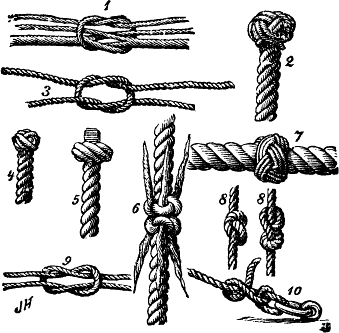
A knot (Al’uqda العُقدة , knot in arabic share the same root with contract العقد ) is one of the methods used to secure and stabilize materials in order to ensure proper fastening or binding of linear materials such as rope, through tying or interweaving. A knot may be formed from a single piece or from straight segments of ropes, cords, straps, or even chains that are looped and intertwined in a way that creates the possibility of binding an object to itself. Knots constitute a subject of ancient origin and widespread practical use, and they have also attracted sustained scholarly interest, including in mathematics within the field of knot theory. Moreover, knot-tying is taught extensively in military training and scouting contexts.
Conclusion
This study demonstrates that the Arabic root (ʿ–q–d) and the English word contract, despite their differing metaphorical images, share a deep semantic core: the transformation of dispersion into binding connection. Arabic represents this connection as an internally interwoven structural configuration, while English represents it as a process of attraction leading to the convergence of wills. The difference, therefore, is not one of essence, but of linguistic perspective in representing the same fundamental act—the transition from free possibility to binding structure.